Why Organizational Assessments Are Essential in Private Equity Transactions
By Josh Rosenberg
How leadership evaluations drive early ROI and reduce execution risk in PE deals
Financial due diligence reveals what a business is, but organizational assessments uncover what it can become. In private equity, where timing is compressed and value creation is expected immediately, understanding the strength of leadership teams, cultural dynamics, and communication health is no longer optional—it’s essential.
The Risk You Cannot See on a P&L
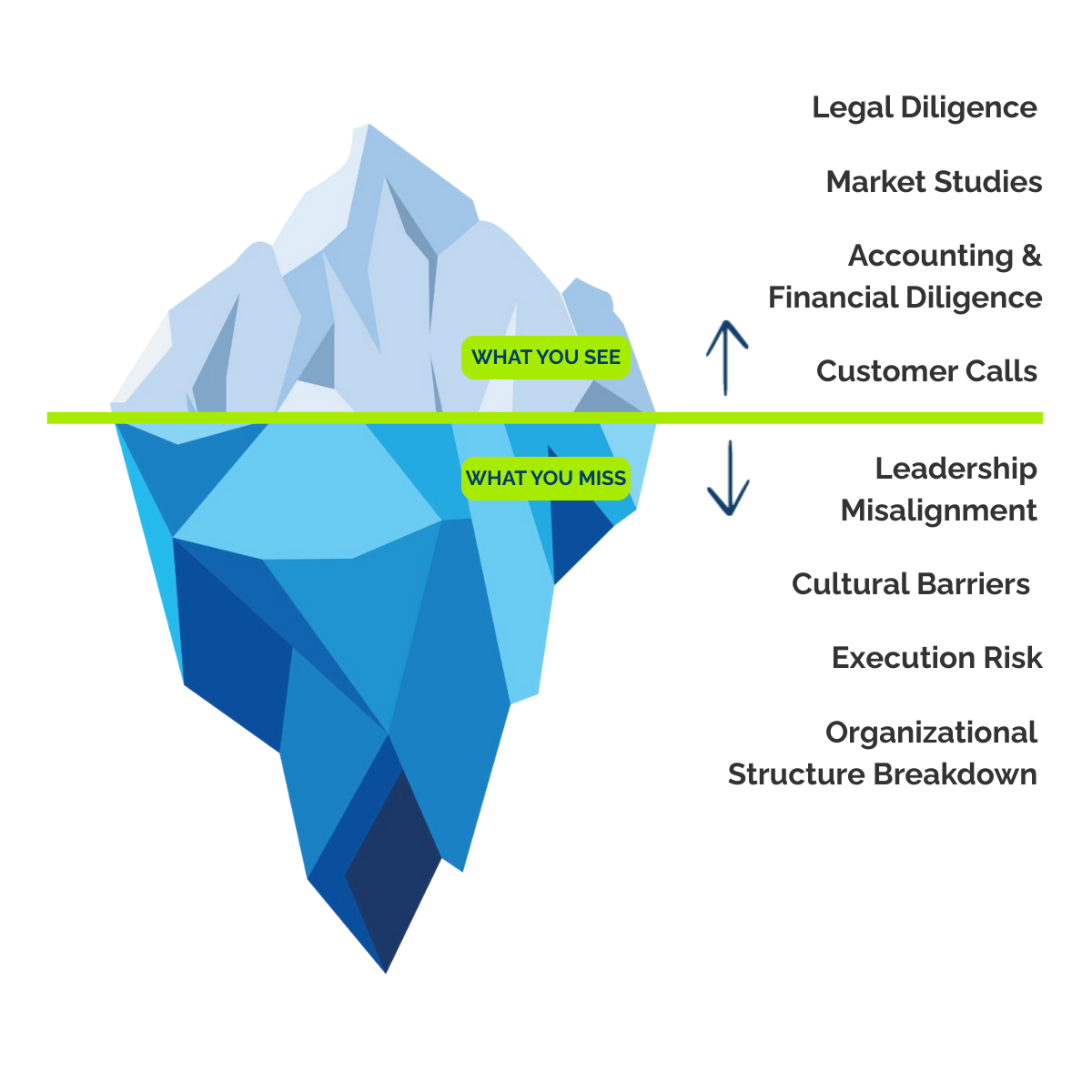
Most value erosion in PE transactions doesn’t stem from bad products or declining markets. It comes from people. Misaligned leaders, unclear accountability, and fractured cultures delay integration, block execution, and undermine strategic momentum. These issues rarely appear in traditional due diligence efforts but may surface quickly post-close—often when it’s too late to course-correct without significant cost.
Consider the statistics. Seventy percent of PE deals underperform due to leadership misalignment and cultural breakdowns. Fifty-three percent of investment ROI is attributed to leadership effectiveness. Yet less than one percent of deal diligence costs are spent on organizational assessments, despite their significant influence on long-term outcomes.
The gap between financial and organizational assessment creates blind spots that impact returns. You can validate the numbers, assess the market, and model the projections—but if the leadership team can’t execute the thesis, none of it matters.
What Traditional Due Diligence Misses
Standard due diligence processes excel at uncovering financial, legal, and operational risks. But they’re not designed to evaluate the human factors that drive execution. Generic 360 reviews or HR-led culture surveys lack the strategic lens and urgency that private equity requires.
Most private equity due diligence endeavors miss the critical drivers of execution failure. You can’t fix what you can’t see, and traditional approaches simply don’t dig deep enough into leadership’s readiness, organizational structure, accountability frameworks, or cultural alignment.
Why PE Requires a Different Assessment Lens
Unlike generic 360 reviews or HR-led culture surveys, private equity needs a structured, strategic, and time-sensitive approach. The Organizational Assessment tool by Keystone Partners was built specifically for this use case—tailored to pre-acquisition and post-close environments where speed, clarity, and alignment are vital.
Purpose-Built for Private Equity Value Creation
Keystone’s proprietary organizational assessments are designed specifically for private equity sponsors. The tools uncover hidden leadership risks, cultural misalignments, and executional gaps—before they impact returns. Whether pre-acquisition or post-close, the assessments deliver actionable insights that accelerate value creation, de-risk execution, and drive alignment between management and investor expectations.
Speed Meets Rigor
A Baseline Assessment can be delivered in less than two weeks and assesses execution ability, leadership readiness to create value, and risk mitigation strategies. The Comprehensive Assessment identifies leadership misalignment, cultural barriers, and organizational structure breakdown in approximately 120 days, with targeted action recommendations delivered throughout the process.
A total average pre-acquisition analysis can cost between $1.5M to $3M, and an organizational assessment can cost less than $50K—giving the organization a 15% EBITDA lift when completed early in the hold period.
Use Cases Across the Deal Lifecycle
Organizational assessments aren’t one-size-fits-all. Different deal stages require different lenses.
Here’s where strategic assessment delivers the most value:
Pre-Close Due Diligence: Validate leadership fit, assess risk, and map organizational readiness before the deal closes. Identify red flags early—such as key person dependencies, leadership gaps, or cultural misalignment—that could derail your thesis. Use assessment data to inform valuation adjustments, retention planning, and post-close priorities.
Post-Close Alignment: Accelerate integration, define roles, and build trust among key stakeholders in the critical first 100 days. Align leadership teams around strategic priorities, clarify accountability, and establish communication norms. This is when speed matters most—delays in alignment will create cascading execution failures.
Thesis Testing and Change Management: Evaluate whether the team can execute the plan and embrace the change required for value creation. Assess adaptability, decision-making speed, and cross-functional collaboration. Determine if the current leadership has the capability to scale—or if augmentation is needed.
Bolt-On Acquisitions or Carve-Outs: Assess standalone strength and integration compatibility when adding to a platform or separating from a parent company. Evaluate cultural fit, leadership redundancy, and structural gaps that could impede synergy realization.
The 7 Competencies That Define Scalable Leadership
Keystone’s Organizational Assessment measures leadership across seven dimensions that directly influence deal performance, post-close execution, and long-term scalability. These competencies aren’t theoretical—they’re predictive.
1. Strategic Vision & Scalability
Does the leadership team have a clear, compelling vision for where the business is going? Can they articulate how the company will scale, adapt to market shifts, and achieve the investment thesis? Strategic clarity drives alignment and accountability across the organization.
2. Organizational Structure & Role Clarity
Is the organizational structure designed to support scale, ownership, and speed? Are roles clearly defined with appropriate decision rights? Structural ambiguity creates bottlenecks, slows execution, and frustrates high performers.
3. Execution & Performance
Can this team execute under pressure? Do they have a track record of hitting targets, managing accountability, and driving results? Execution capability separates high-performing portfolio companies from underperformers.
4. Communication & Influence
How effectively does leadership communicate across functions, levels, and stakeholder groups? Strong communicators build trust, align teams, and navigate conflict. Poor communication leads to misalignment, low morale, and missed opportunities.
5. Human Capital Optimization
Does the leadership team optimize talent effectively? Are they developing bench strength, addressing performance gaps, and retaining critical players? Talent management directly impacts the company’s ability to scale and compete.
6. Collaboration & Change Management
How well does the team collaborate across silos? Can they manage change, embrace ambiguity, and integrate new processes or systems? In a PE-backed environment, adaptability and change readiness are non-negotiable.
7. Leadership & Culture
How does leadership culture drive or hinder trust, accountability, and goal clarity? Does the culture support EBITDA growth and IRR targets? Leadership culture directly impacts the bottom line—either accelerating value creation or quietly eroding it.
Scoring That Reveals Gaps and Opportunities
Each competency is scored on a scale from 1 (Poor) to 5 (Exceptional). The assessment reveals not just where the organization stands today, but where performance may break down, where misaligned KPIs exist, where low accountability or slow decision cycles impact the bottom line, and where hidden risks and opportunities lie.
0-60 Days: Focus on Clarity & Communication (host org-wide strategic vision cascade)
60-120 Days: Focus on Talent Optimization (define success profiles for critical roles)
120+ Days: Focus on Leadership & Culture (embed behaviors in daily team routines and coaching plans)
From Assessment to Action
In 2–3 weeks (for a Baseline Assessment), the Organizational Assessment delivers a focused report with prioritized risks, alignment gaps, and cultural insights. More importantly, it provides a roadmap to accelerate execution and unlock value through leadership.
What You Get
The assessment output isn’t a binder that sits on a shelf. It’s an executive-ready report with clear priorities, specific risks, and actionable recommendations.
You’ll receive:
Leadership scoring across all seven competencies with strengths and gaps identified
Cultural and structural risk assessment highlighting barriers to execution
Prioritized action plan with quick wins and long-term initiatives
Stakeholder alignment sessions to ensure buy-in and clarity on next steps
Ongoing partnership as you move from insight to execution
Keystone Partners Supports PE Throughout the Lifecycle
Keystone Partners supports PE firms throughout the investment lifecycle, from pre-acquisition through post-acquisition and beyond. Whether you need leadership assessment during the deal process, executive coaching for portfolio CEOs, or organizational design support during integration, Keystone becomes your trusted partner—turning insight into excellence and providing an action guide toward future success.
This isn’t about intuition. It’s about aligning stakeholders through evidence. Private equity sponsors, CEOs, and portfolio operators use the assessment to ground conversations in facts—not feelings—and to set the tone for performance expectations.
When you have objective data on leadership strengths, cultural alignment, and execution capability, you can make better decisions faster. You can address tough issues early. You can prioritize leadership investments where they’ll have the biggest impact. And you can align the board, management team, and operating partners around a shared understanding of what needs to change.
The assessment becomes the foundation for performance conversations, leadership development plans, and organizational transformation initiatives. It creates accountability and momentum when both are needed most.
“The Organizational Assessment provided the clarity and operational insight we needed to drive efficiency and growth post-acquisition. A must-have tool for any serious private equity investor!”
Make Organizational Assessment Core to Your Playbook
If your deal thesis depends on people—and it always does—then it’s time to make organizational assessment a core part of your value creation playbook. The sooner you align leadership, the faster you unlock value.
Every private equity investment is a bet on leadership. Are your executives ready to scale, execute, and drive results? The only way to know is to assess—rigorously, strategically, and early.
Don’t wait until post-close challenges reveal what due diligence should have uncovered. Invest in organizational assessment as a de-risking tool and a value creation accelerator. The returns speak for themselves.
Ready to assess your portfolio company’s leadership readiness?
Schedule a consultation with Keystone Partners to discuss your organizational assessment needs.
Subscribe to updates from Keystone Partners to receive resources on career transitions, talent management, HR trends & strategies, leadership development and much more straight to your inbox.